FASHION / THE JOURNAL
The New Language of Quiet Luxury
Luxury has stopped announcing itself. On the new codes of dressing — weight, cut, restraint — and why they now matter more than any logo.
THE FASHION IN YOU · THE EDIT
There was a time when luxury needed to be seen from across the room. A monogram, a buckle, a colour that belonged to one house alone. Today, the most expensive clothes in the room are often the ones you notice last.
Quiet luxury is not an aesthetic so much as a discipline. It asks what a garment is made of, how it was cut, and whether it will still feel right in ten years. It rewards attention rather than recognition.
Weight, not volume
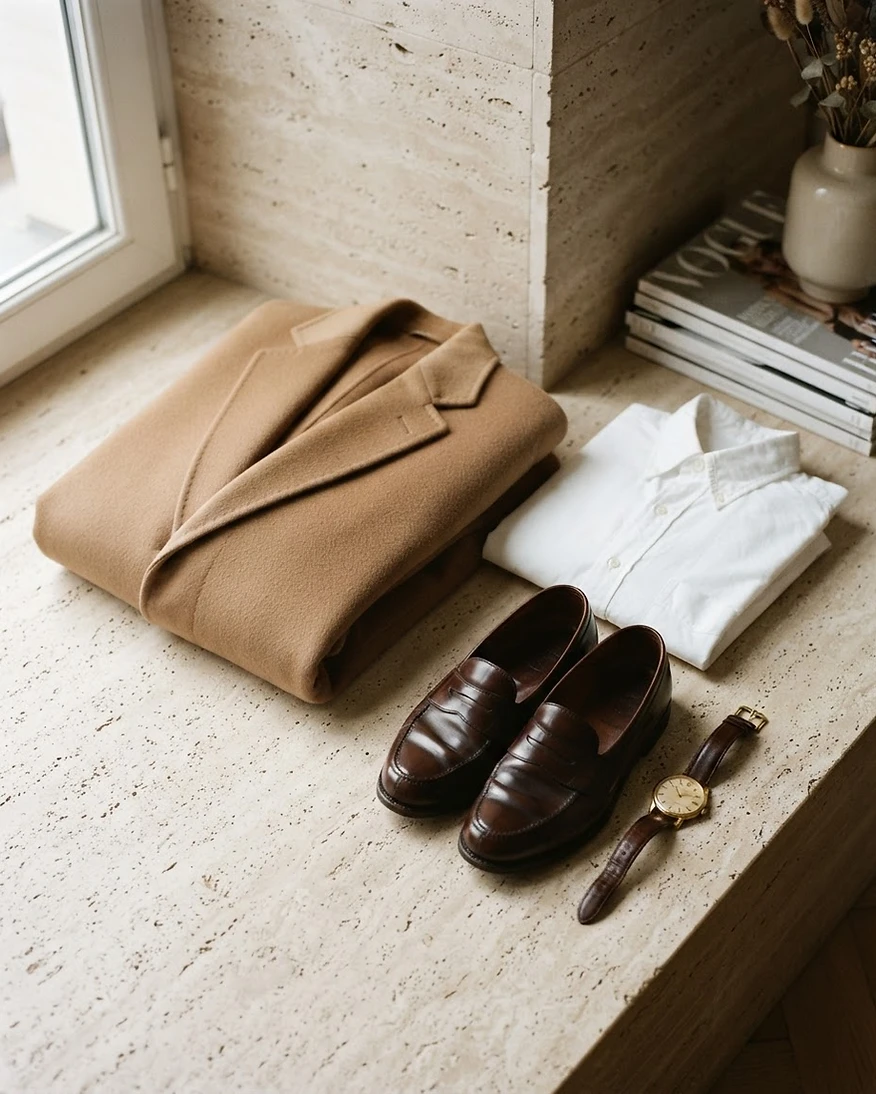
Pick up a well-made coat and the first thing you feel is its weight — the density of the wool, the way it settles on the shoulders. Weight communicates care in a way that no embellishment can.
“Luxury no longer announces itself. It simply arrives — in the fall of a trouser, the silence of a well-cut seam.”
Fewer, finer, forever
The wardrobes we admire most are rarely large. They are edited: a handful of pieces worth keeping that work hard together, each chosen for how it feels in ordinary life rather than how it photographs on one perfect day. A quiet wardrobe is not restricted to beige. It might be ink, olive or aubergine; what matters is that the colours speak to one another.
Begin with the silhouette. Before reading a label, look at where a shoulder seam sits, whether a trouser falls cleanly from the hip and how a jacket behaves when you move. A good fit leaves room to breathe. It does not need constant adjustment. Try the garment with the shoes and layers you actually wear, then look at it from the side as well as the front.
Let material do the talking. Touch the fabric and read its composition. Wool can feel fluid or structured; cotton can be crisp or soft. Neither a high price nor a natural fibre automatically makes a piece right for you. Examine the stitching, lining and closures. If the finish is thoughtful where few people will see it, the garment is more likely to reward close attention.
Buy for a life, not an image. Consider three real occasions in the coming month when you would wear the piece. If you have to invent a different lifestyle to justify it, pause. The most valuable purchase is often the coat you reach for every cold morning or the shirt that makes familiar trousers feel newly considered.
Care is part of style. Brush a coat, repair a loose button, clean shoes and store knitwear with room to rest. Follow each garment’s care label. Small acts of maintenance preserve the line and texture that made you choose it in the first place.
Quiet luxury, at its best, is less a rule about what to buy than a way of paying attention. The goal is not to look anonymous or expensive. It is to build a wardrobe that feels unmistakably yours, and to let its quality reveal itself over time.
CONTINUE READING